

Utility doors influence how a fenced property works daily, not just how it looks. Homeowners depend on these access points for movement, maintenance, and privacy control. When utility doors align with fence panels and perimeter systems, the entire layout feels intentional and reliable. Poor integration often causes sagging, security gaps, or visual breaks. Thoughtful planning around utility doors supports long-term performance and homeowner confidence.
Utility Doors in Residential Fence Systems
Utility doors are narrow access doors built into residential fence systems for daily use. These doors allow foot traffic without opening full-sized gates, which preserves fence stability. Homeowners commonly install them in side yards, backyards, or service areas. Proper integration helps utility doors support convenience, security, and visual consistency across the property.
What Utility Doors Mean for Homeowners
Utility doors provide controlled access through a fenced perimeter. These access points support routine tasks like yard care or waste removal. Unlike large gates, utility doors open quickly and require less space. Their smaller size reduces strain on posts and hardware. Homeowners value them for privacy and ease of use. This practical design fits modern residential needs.
Utility Doors Compared to Standard Fence Gates
Utility doors differ from fence gates in size and purpose. Fence gates often allow vehicles or equipment to pass through. Utility doors focus on foot traffic only. Their framing remains lighter but is still reinforced for frequent use. Hardware selection reflects repeated opening cycles. This difference affects how installers anchor surrounding fence panels.
Common Placement of Utility Doors
Utility doors usually appear alongside yards or rear fence lines. These locations support movement without disrupting street-facing views. Homeowners often place them near gardens or storage areas. Placement planning considers visibility and accessibility. Poor placement can reduce privacy or convenience. Thoughtful positioning improves daily function.
How to Align Utility Doors With Fence Panels
Utility doors must align visually and structurally with fence panels. Proper alignment keeps fence lines smooth and uninterrupted. Even minor inconsistencies can stand out across a long perimeter. Careful coordination between panels and doors supports durability and curb appeal.
Match Fence Panel Heights
Fence panel height defines privacy and boundary strength. Utility doors must match this height exactly. Even slight variations draw attention to the door opening. Installers measure panel tops before framing doors. Accurate cuts prevent uneven transitions. This precision supports a clean fence line.
Coordinate Panel Spacing and Door Frames
Panel spacing shapes how a fence appears from every angle. Utility door frames must follow the same spacing pattern. Misaligned spacing weakens visual balance. Installers often adjust framing to match rail placement. Consistent spacing supports structural stability. This alignment reduces stress on adjacent panels.
Preserve Fence Flow Across Openings
Fence flow refers to uninterrupted visual movement along the perimeter. Utility doors interrupt this flow if poorly designed. Matching slat direction reduces visual breaks. Hardware placement also affects appearance. Subtle hinges blend better with panels. Smooth flow keeps utility doors discreet.
Utility Doors in Perimeter Fence Systems
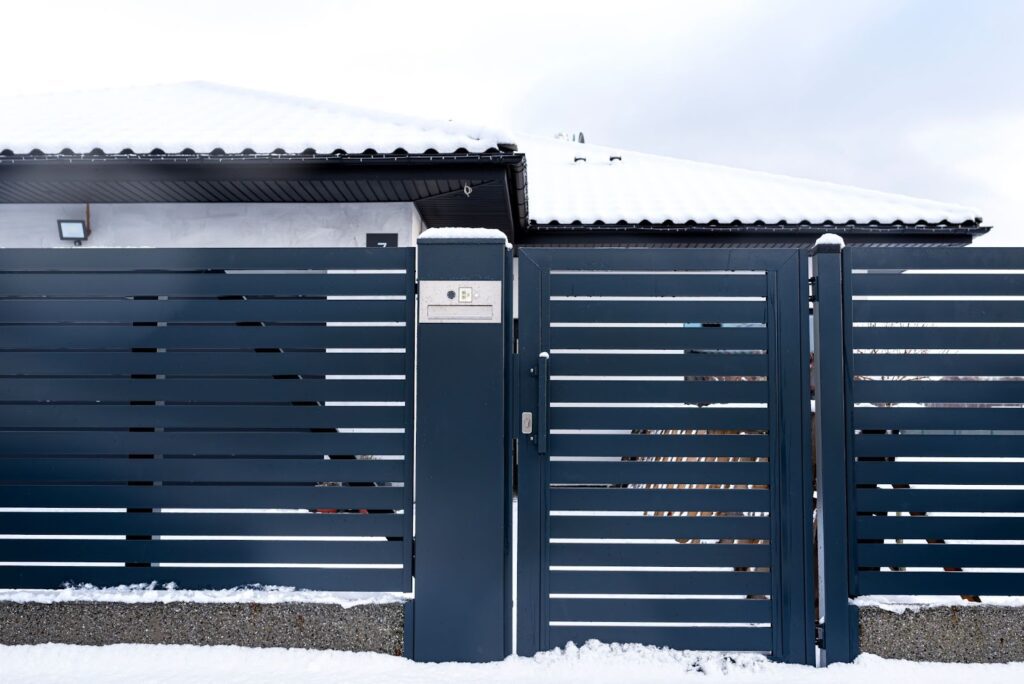
Perimeter systems rely on continuity and controlled access. Utility doors introduce openings without weakening boundaries. These doors balance accessibility with protection. Homeowners benefit when doors support the overall perimeter strategy.
Managing Access Points Effectively
Utility doors create intentional access points. These openings reduce the need for oversized gates. Narrow widths discourage unnecessary traffic. Lockable hardware adds another control layer. Homeowners manage movement without sacrificing privacy. This controlled access supports perimeter clarity.
Supporting Security Through Placement
Door placement affects security outcomes. Utility doors work best in visible areas. Hidden locations increase vulnerability. Many homeowners pair doors with lighting. Reinforced frames add resistance. Strategic placement strengthens perimeter reliability.
Integrating Utility Doors With Landscaping
Landscaping interacts directly with utility doors. Door swing paths must remain clear. Plants should not block access. Proper grading prevents soil buildup near frames. Drainage planning protects door operation. Landscaping coordination supports long-term usability.
Design Choices for Utility Doors and Fences
Design choices determine how utility doors blend with fences. Homeowners expect doors to match fence styles. Visual consistency supports property value. Good design prevents doors from appearing like afterthoughts.
Selecting Matching Door Materials
Material selection shapes durability and appearance. Wood doors pair naturally with wood fences. Vinyl doors align with vinyl panels. Metal doors support aluminum or steel systems. Mixing materials requires careful coordination. Consistent materials reduce maintenance issues.
Choosing Hardware That Blends
Hardware affects both function and appearance. Powder-coated hinges blend with fence finishes. Oversized hardware can distract visually. Low-profile latches maintain clean lines. Corrosion-resistant materials extend lifespan. Hardware choice supports daily reliability.
Coordinating Colors Across Fence Systems
Color unifies fence components visually. Utility doors should closely match the panel finishes. Even minor color shifts stand out outdoors. Many fencing brands offer matching components. Custom staining helps wood fences align. Color consistency improves curb appeal.
Structural Integration of Utility Doors
Structural integration supports long-term door performance. Utility doors are subject to frequent movement and stress. Proper framing protects nearby fence panels. Homeowners benefit from doors that stay aligned over time.
Post Placement and Load Support
Posts anchor both doors and panels. Utility doors require reinforced posts. Load support prevents sagging. Installers often set deeper posts near doors. Proper spacing reduces hinge stress. Strong anchoring improves longevity.
Reinforcing Utility Door Frames
Reinforcement protects against repeated use. Metal inserts strengthen wood frames. Cross bracing prevents twisting. Heavy-duty hinges support weight. Reinforced frames reduce repairs. This structure promotes frequent opening cycles.
Preventing Long-Term Door Sagging
Sagging remains a common issue with doors. Proper hinge alignment reduces strain. Adjustable hinges allow corrections later. Level installation matters from the start. Weather exposure increases risk. Regular checks catch early movement.

Smooth Installation of Utility Doors
Utility door installation works best when handled with planning and experience. Proper preparation helps doors align cleanly with fence panels and perimeter layouts. Skilled installers anticipate site conditions before work begins. This proactive approach supports long-term performance and clean visual results.
Prepare for Slopes and Ground Conditions
Ground conditions shape how a utility door performs after installation. Sloped yards require careful grading to support smooth door movement. Installers adjust hinge placement to maintain proper clearance. Stable soil helps posts remain secure over time. Drainage planning prevents water buildup near frames. This preparation keeps doors open freely year-round.
Integrate Utility Doors Into Existing Fences
Adding a utility door to an existing fence requires careful coordination. Installers remove panels without damaging surrounding sections. Matching materials helps the door blend naturally. Reinforced posts provide added support where needed. Proper alignment maintains fence flow. Experienced teams make retrofits look original.
Achieve Reliable Results Through Best Practices
Accurate measurements guide every successful installation. Strong posts support frequent door use. Quality hardware improves smooth operation. Installers follow a step-by-step process for consistency. Attention to detail reduces future adjustments. This careful approach delivers dependable performance.
Maintaining Utility Doors Within Fence Systems
Ongoing maintenance keeps utility doors dependable and easy to use. Regular foot traffic naturally creates stress on hinges, frames, and connection points. Consistent upkeep helps minor issues stay manageable instead of spreading across the fence line. Homeowners who follow simple care routines often avoid costly repairs later.
Caring for Wood Utility Doors
Wood utility doors require routine sealing and visual inspections. Moisture exposure can cause swelling, cracking, or gradual warping over time. Annual staining protects the surface and helps the door maintain its shape. Hinges benefit from periodic lubrication to support smooth movement. Minor repairs handled early prevent structural damage. This ongoing care extends the door’s working life.
Maintaining Vinyl and Metal Doors
Vinyl utility doors resist moisture and temperature changes well. Occasional cleaning removes dirt that can affect door movement. Metal doors need attention to prevent rust, especially around hardware. Protective coatings help metal surfaces withstand weather exposure. Regular hardware checks keep latches and hinges secure. These steps help doors stay reliable year after year.
Monitoring Stress Points Near Doors
Stress points often develop around hinges and frame connections. Fence panels near doors may loosen as movement continues. Routine inspections help identify shifting before alignment changes are needed. Tightening fasteners keeps panels and doors working together. Addressing stress early prevents wider fence damage. Consistent monitoring supports long-term system stability.
Utility Doors and Long-Term Property Planning
Utility doors influence how a property adapts over time. Homeowners often change landscaping, storage, or yard use. Doors placed with flexibility in mind remain useful longer. Forward-thinking placement avoids future modifications.
Utility Doors and Future Yard Changes
Homeowners often add sheds, patios, or gardens later. Utility doors placed near adaptable zones support these changes. Fixed placement without foresight creates inconvenience. Flexible access reduces future fence alterations. Thoughtful planning saves time and expense. Long-term thinking benefits property value.
Aging-in-Place Considerations for Utility Doors
As homeowners age, ease of movement becomes more important. Narrow or uneven door thresholds cause difficulty. Smooth swings and reachable latches support accessibility. Level ground near doors reduces the risk of trips. Simple adjustments support long-term usability. Accessibility planning adds value.
Plan Utility Doors That Support Your Fence System
Utility doors influence how well a fence system performs over time. Thoughtful planning keeps access points convenient without weakening structure or privacy. Homeowners who align door placement with movement patterns reduce long-term wear. A strong fence system begins with doors planned for real use, not quick installation.
For deeper insights on fence design, access planning, and long-term performance, visit the Saddleback Fence and Vinyl Products blog and explore expert guidance built for homeowners.